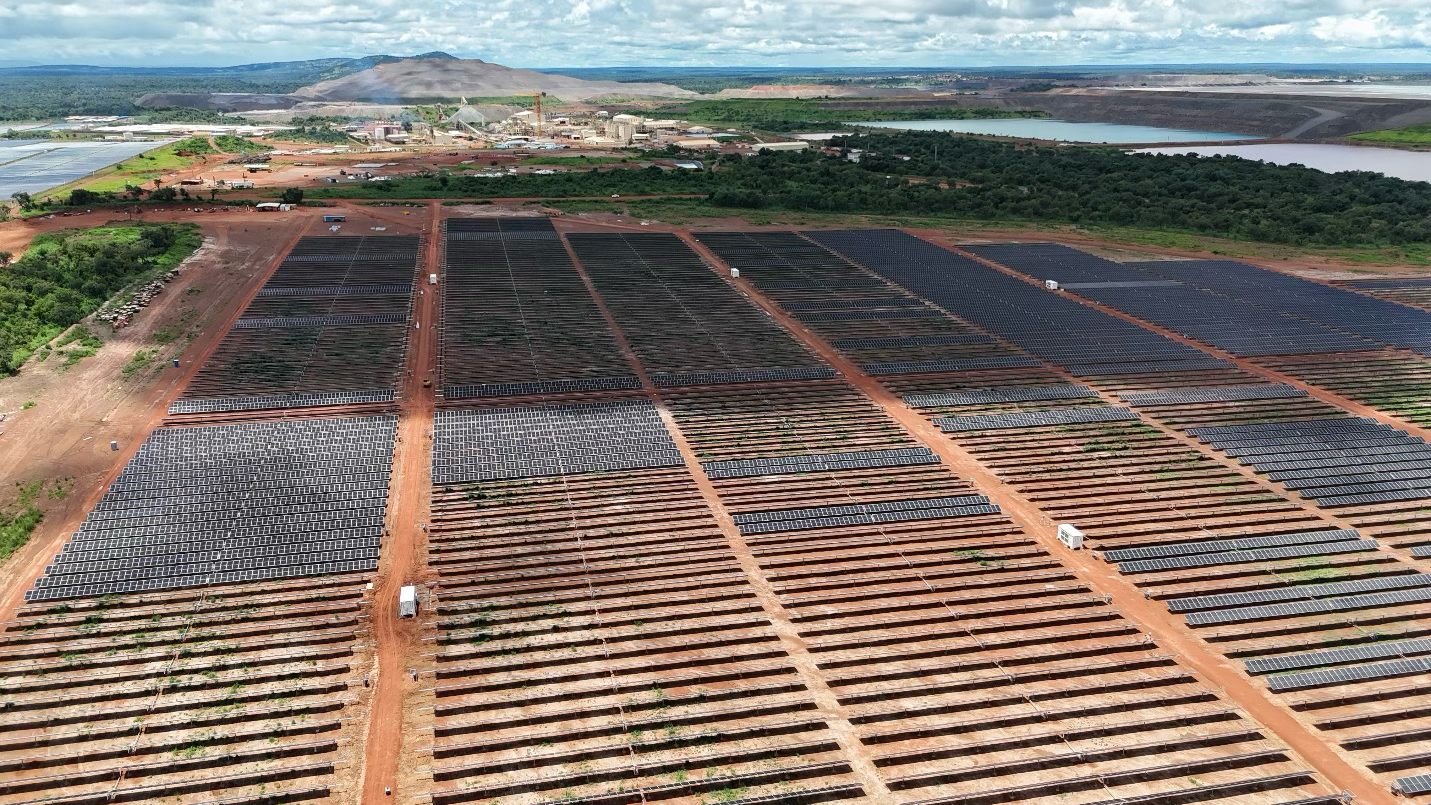
From its inception, the Fekola Mine was designed as a self-sufficient “island”
operation due to the lack of accessible electricity grid connections. The
original Fekola power plant, commissioned in July 2017, consisted of four
Caterpillar HFO generators, providing the thermal power needed for operations.
As mine production expanded, so did the demand for energy, leading to the
addition of two more engines.
In April 2021, the Phase 1 hybrid power plant was successfully integrated,
incorporating 30 MW of solar energy and 17.3 MW of battery storage.
This upgrade significantly improved power generation efficiency, reducing HFO
reliance. During peak solar hours, only two or three thermal engines were
required, resulting in greater fuel efficiency, substantial reductions in GHG
emissions, and lower annual HFO consumption. In 2024, the hybrid power plant cut
GHG emissions by approximately 38,000 tonnes of CO2e and saved around
13 million litres of HFO.
In early 2025, the Phase 2 solar expansion was commissioned, further
strengthening the plant’s renewable energy capacity while enhancing energy
efficiency and grid stability. This latest expansion added another 22 MW of
solar power and 12.7 megawatt hours (MWh) of battery storage, making the
Fekola hybrid power plant one of the largest off-grid hybrid energy systems in
the mining industry, with a total solar capacity of 52 MW and approximately
28 MWh of battery storage.
Looking ahead, the expanded Fekola hybrid power plant is expected to supply
approximately 30% of the mine’s total electricity demand, reducing overall
operating costs and lowering the mine’s carbon footprint. As the mining
industry faces increasing pressure to decarbonize, Fekola stands as a benchmark
for sustainable energy innovation. Its success demonstrates that hybrid power
solutions can play a pivotal role in achieving environmental targets while
maintaining operational efficiency.